Data Courtesy of CoStar™
The Los Angeles office market remains under significant pressure, with conditions continuing to deteriorate into 2026. Vacancy has reached a record high of 16.7%, and net absorption has remained consistently negative, totaling approximately -2.2 million square feet over the past year. The market continues to underperform relative to the national average, where vacancy is lower at 13.9%. While a handful of submarkets are showing resilience, market‑wide fundamentals remain soft.
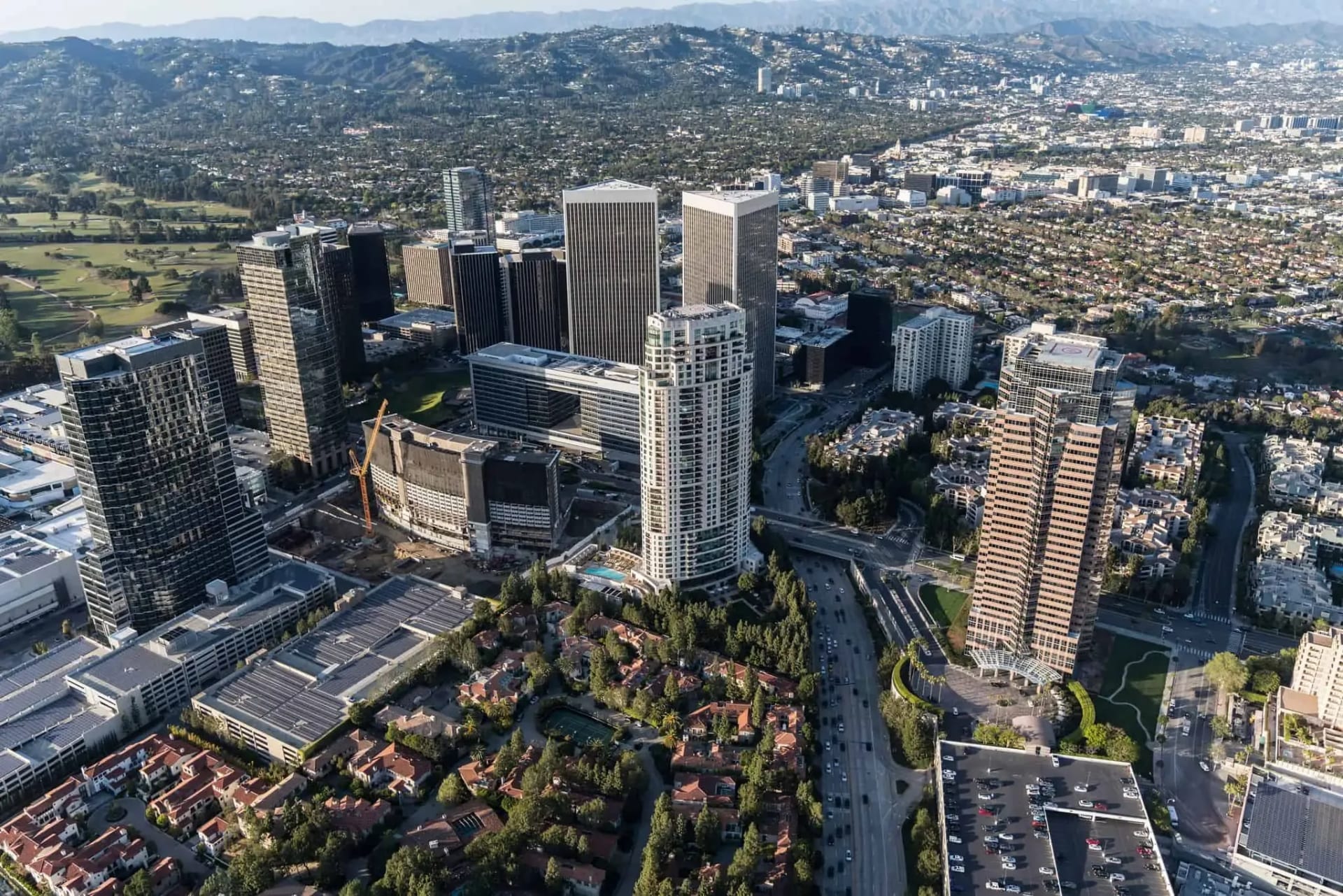
Demand for office space is generally declining across Los Angeles, though potentially turning the corner. Employers have been slow to implement return‑to‑office mandates, favoring hybrid work arrangements that reduce overall space needs. A low‑hire, low‑fire labor environment, paired with rising productivity, has further limited expansion demand. Key local demand drivers—technology and entertainment—remain uncertain. AI‑driven tech growth has largely bypassed Los Angeles in favor of other markets, while the entertainment industry continues to face structural change and production losses. Despite these headwinds, select submarkets such as Beverly Hills, Century City, and El Segundo are outperforming due to strong tenant preferences for high‑quality, Class A space and demand from more stable industries including legal, media, and aerospace and defense.
New office supply remains limited and is no longer a major source of pressure. Only 2.4 million square feet is currently under construction, roughly half the historical average, with most projects build to suits. Development activity has slowed sharply due to weak demand, elevated construction and borrowing costs, and limited access to financing. At the same time, demolitions and office‑to‑residential conversions are accelerating, resulting in negative net deliveries. Several large‑scale conversions, particularly in Downtown Los Angeles, are permanently removing office inventory, while the largely preleased 1950 Avenue of the Stars project in Century City stands out as the lone major success.
12 Mo Deliveries in SF
12 Mo Net Absorption in SF
Vacancy Rate
Market Asking Rent Growth
12 Mo Sale Volume
The combination of falling demand and limited new supply has kept vacancy elevated, especially in older, less competitive buildings. Obsolete stock in Downtown Los Angeles and Santa Monica continues to struggle as tenants migrate to newer or better‑located assets, reinforcing a highly bifurcated market. However, the shrinking construction pipeline and ongoing inventory reductions are expected to support gradual vacancy compression over the longer term.
Rent growth remains subdued. Since the pandemic, cumulative rent growth has been minimal, with annual increases below 1%. Submarket performance diverges sharply, with Downtown Los Angeles experiencing stagnant rents while Century City and El Segundo have posted strong long‑term growth. Landlords have largely resisted cutting asking rents, instead offering significant concessions such as free rent and elevated tenant improvement packages. Despite this, rent growth is expected to remain below 2% in the near to mid‑term amid persistent vacancies and cautious tenant demand.
You’ve got questions and we can’t wait to answer them.